Challenge
Enterprise organisations had hundreds of APIs scattered across multiple gateways, teams, and runtimes - managed in isolation, with no shared catalog and no visibility into what already existed.
Strategy
Led a 0→1 product design in two phases: first establish a simple, trusted API catalog - then layer in intelligence, observability, and security on top of it.
Results
Built and launched to GA in 18 months, with 7,714 enterprise instances deployed, 385,000+ APIs registered, and the first universal API management platform on GCP.
Challenge
The API sprawl problem
Enterprise organisations had a problem they couldn't see: hundreds of APIs scattered across multiple gateways, teams, and runtimes. Managed in isolation, with no shared catalog, no unified governance, and no way to know what already existed before building something new.
The average large organisation had deployed over 200 APIs. Apigee - recognised as the #1 leader in Gartner's Magic Quadrant for API Management for ten consecutive years - recognised the need for a single view of the entire API landscape.
- Developers spent hours searching for an API that already existed, then built a duplicate when they couldn't find it.
- Platform owners had no visibility into which APIs were healthy, which were at risk, and which were generating business value.
- Security engineers couldn't assess the exposure of APIs they didn't know about.
"I need to aggregate and correlate API data from various sources - different gateways, non-Apigee runtimes, internal services. Right now I have to do this manually across five different tools."
- Platform Owner, Enterprise API programme
"I need a single interface to access all enterprise context about our APIs - design-time, runtime, and operational data - regardless of where it's stored. We're flying blind."
- Platform Owner, Financial services customer
"I need to understand the purpose and functionality of each API to assess our security posture. Right now there's no reliable source of truth."
- Security Engineer, enterprise GCP customer
Team challenges I navigated
Organizational
Team disruption & low morale
Joined a team whose previous two-year API Gateway project was sunsetted and outsourced. Engineering Architect had just transferred, leaving the team skeptical of the new product direction.
Resource
Severely constrained team
Tasked with leading UI delivery while equipped with only a single junior engineer and a summer intern. Engineering team had no prior UI development experience.
Cross-geo
Competing stakeholder pressures
The expert US-based Apigee team provided minimal technical transition support, yet their counterparts aggressively sought to influence product direction from Bangalore.
Execution
High-stakes pressure
Global leadership viewed API hub as a critical, strategic pillar for Apigee's success on new deals. Balanced execution hurdles under intense organisational pressure throughout.
Strategy
Design a new product from the ground up
In 0→1 enterprise design, I needed to create a completely new visual language and behavioral framework. Every design decision - from the information architecture to the core user model - had to be validated through research and built to scale from day one.
My strategy was grounded in two clear phases:
Phase 1
UX framework
Establish a simple, searchable API catalog that platform owners would actually trust and maintain.
Phase 2
Intelligence layer
Add observability, insights, and security on top of a trusted catalog foundation.
I led and managed a UX project team of 2 UX designers, 1 UX researcher, and 1 content writer. I defined the product vision, core IA, and user model across three distinct personas: platform owners, API developers, and security engineers.
2023
UX vision & design
Defined the product vision, core information architecture, and user model. Established the foundational catalog experience with validated research across all three user personas.
2024
GA launch
API hub reached General Availability after 18 months. Post-GA work included Gateway on-ramp, Auto-Provisioning, API discovery, and Semantic search powered by Vertex AI.
2025
Intelligence & security layer
API Insights (GA), Advanced API Security (GA), unified observability across Apigee X/Edge/OPDK, Gemini Code Assist (GA) - the intelligence layer built on top of the trusted catalog.
Solution
A catalog enterprises would actually trust and maintain
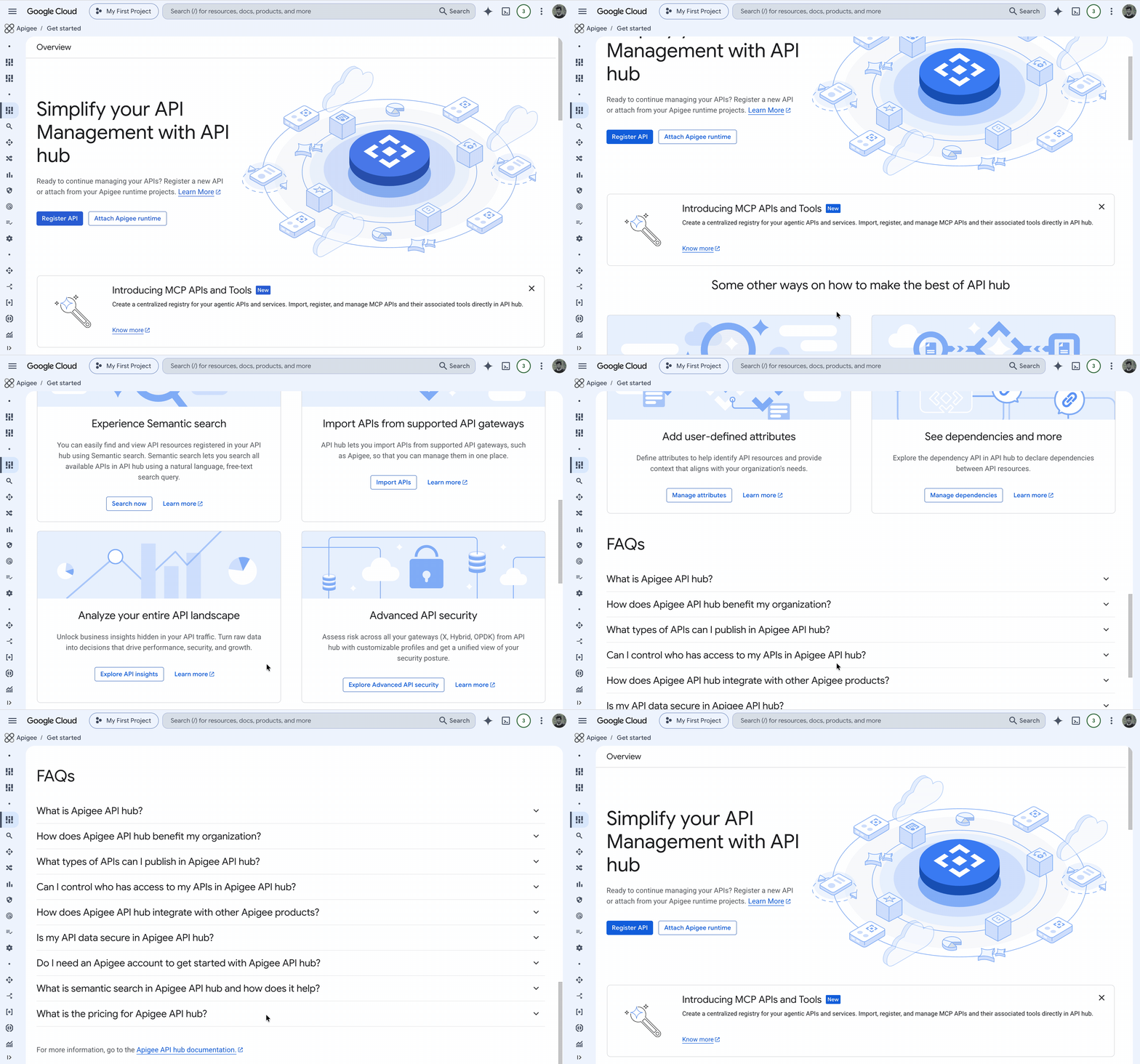
A catalog is only valuable if the data in it is accurate. The core UX challenge was making it effortless to auto-populate the catalog with aggregated data from wherever APIs already lived - then give platform owners the tools to enrich and govern it.
Key surfaces designed
Onboarding
First meaningful catalog entry
Designed around one principle: get to value in the fewest possible steps.
Single pane of glass
API details page
Overview, Versions, Deployments, Insights, Security - all in one unified navigation model.
AI-powered
Semantic search
Vertex AI powered - developers find APIs by describing what they need in natural language.
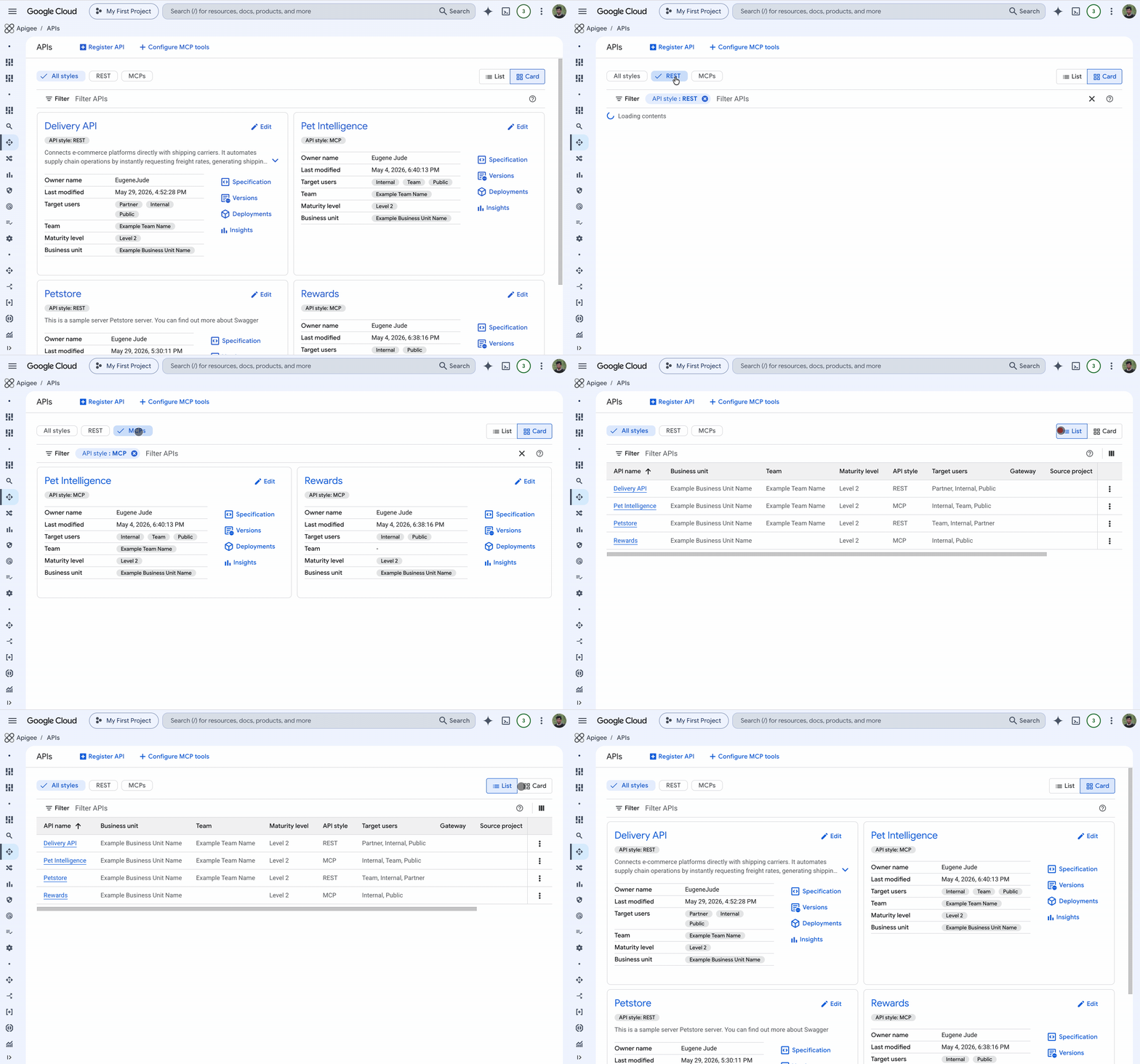
API hub catalog - unified view of all registered APIs across Apigee X, Edge, OPDK, AWS, Azure, and Cloud Run. Platform owners can search, filter, and govern every API from a single pane of glass.
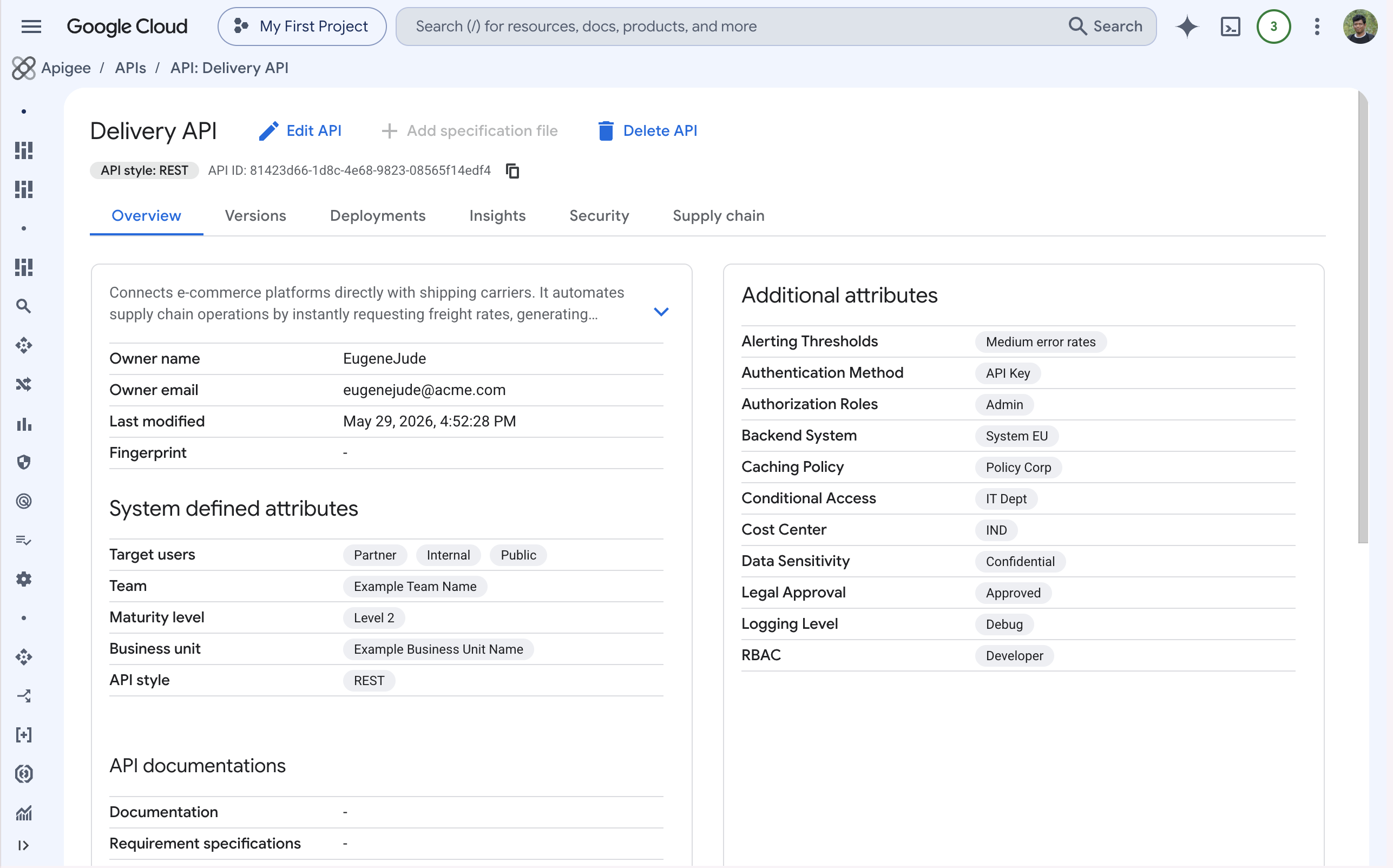
API detail page - a unified navigation model covering Overview, Versions, Deployments, Insights, and Security. Designed to serve three distinct personas - platform owners, API developers, and security engineers - without mode-switching.
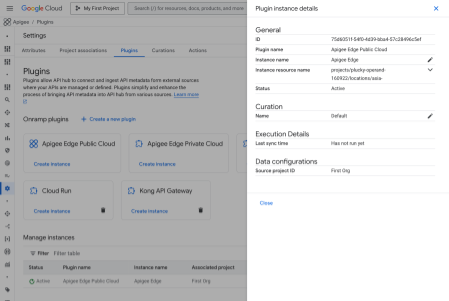
OnRamp plugin settings - configuration interface for connecting existing gateway sources. Designed to minimise setup friction so platform teams reach a meaningful first catalog entry in the fewest possible steps.
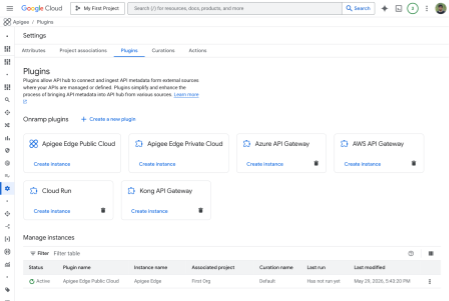
OnRamp plugin flow - auto-populates the catalog by pulling APIs from Apigee, AWS, Azure, and Cloud Run. Enterprises gain full visibility across all gateway sources without requiring API migration.
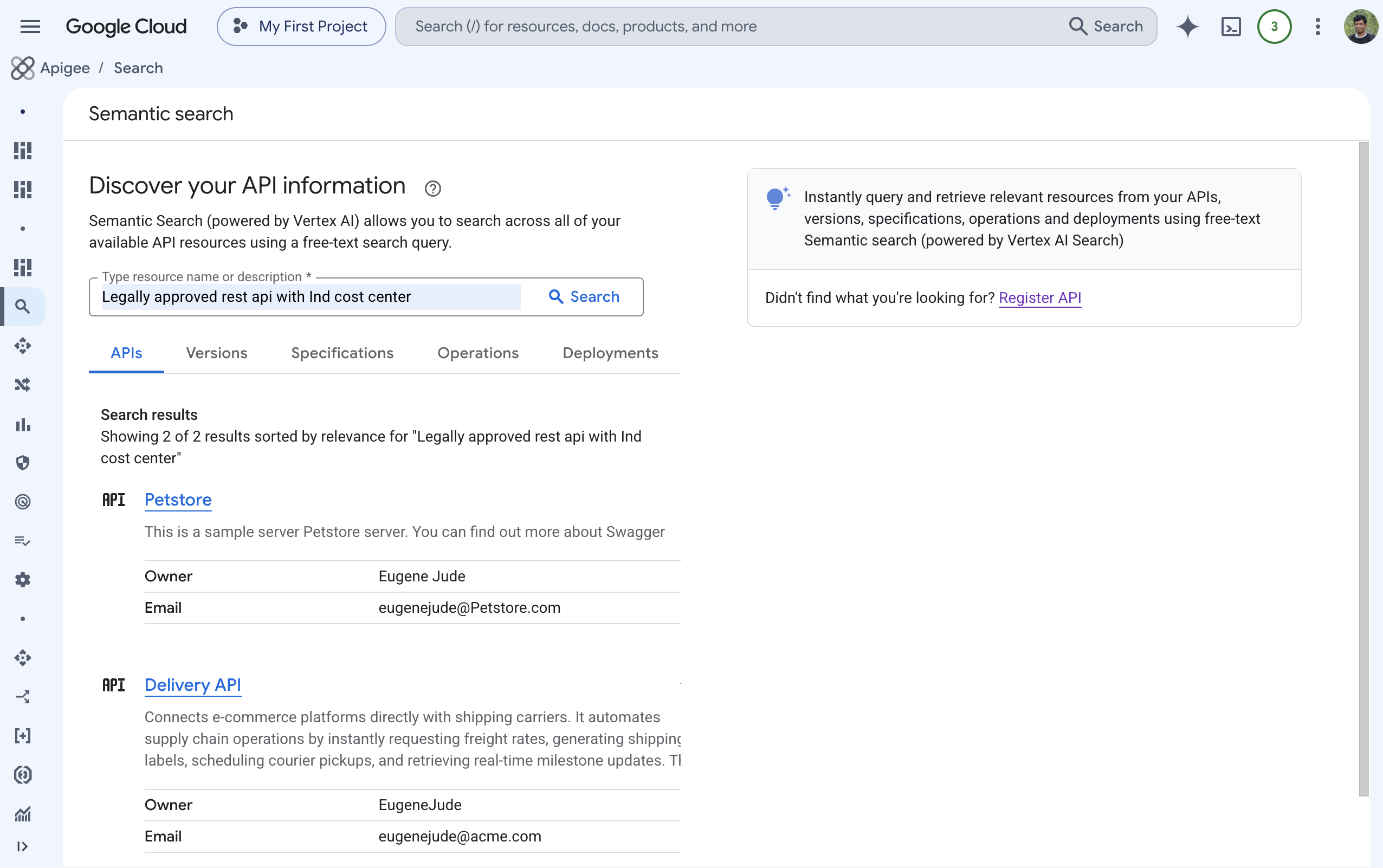
Semantic search powered by Vertex AI - developers describe what they need in natural language and the system surfaces matching APIs across the entire catalog. Eliminates the need to know exact API names or team conventions.
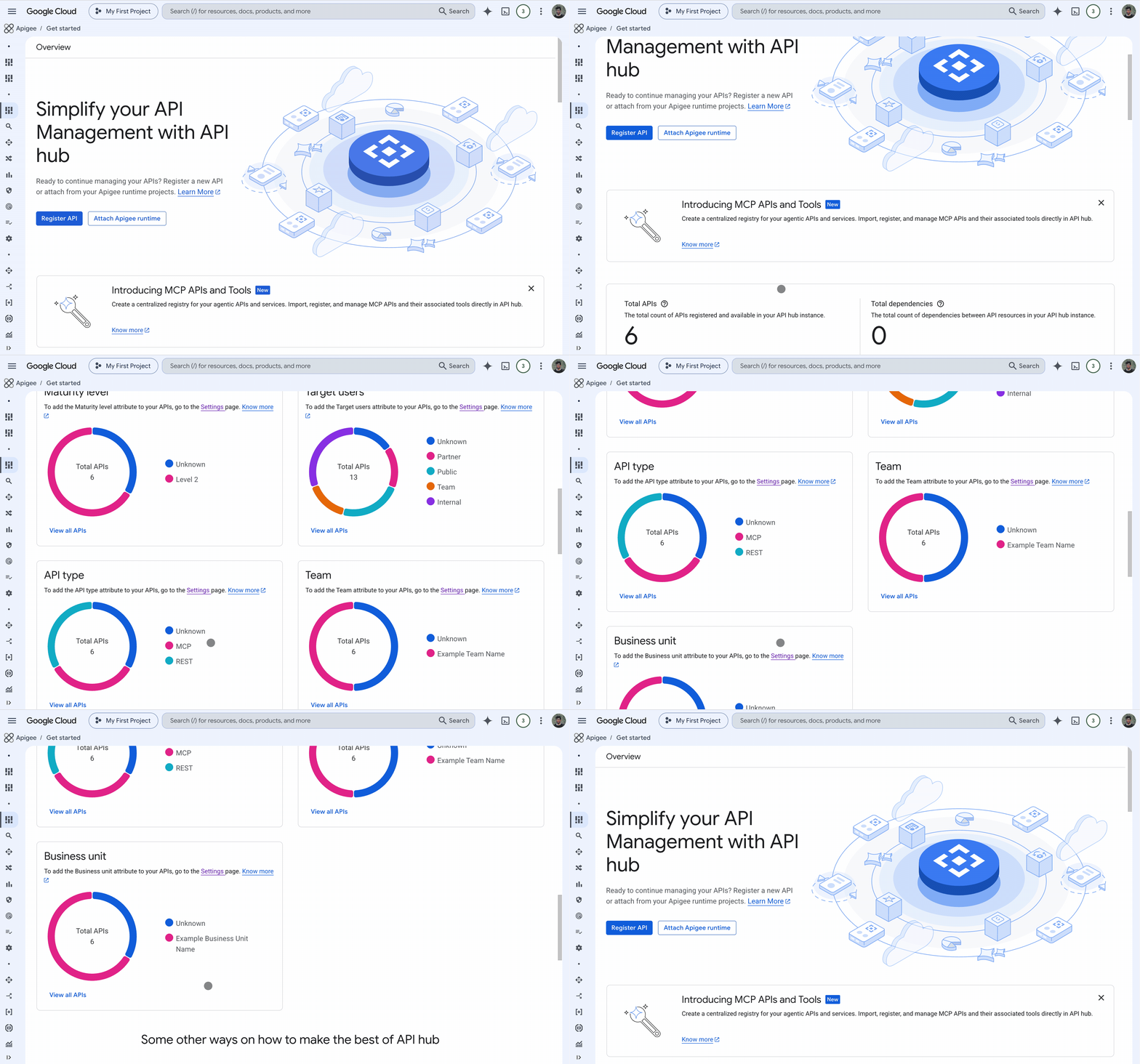
API hub with observability - usage trends, error rates, and traffic analytics surfaced inline on the catalog and detail views. The intelligence layer built on top of the trusted catalog foundation, giving platform owners actionable signal without switching tools.
Results
Traction that proved a design-led 0→1 approach
Select highlights from the API hub launch - proof that a design-led 0→1 approach could create a new enterprise API management category on GCP.
New users
+8K
New users on API hub overview post-GA launch
Instances deployed
7,714
Total API hub instances deployed by enterprise customers - 385,000+ APIs registered
Page views
+15K
Increase in page views following GA launch and UX improvements
Time to GA
18 mo
0→1 product built and launched to general availability
API sources
5+
Apigee products unified under a single observability plane
Category
0→1
First universal API management platform on Google Cloud Platform